

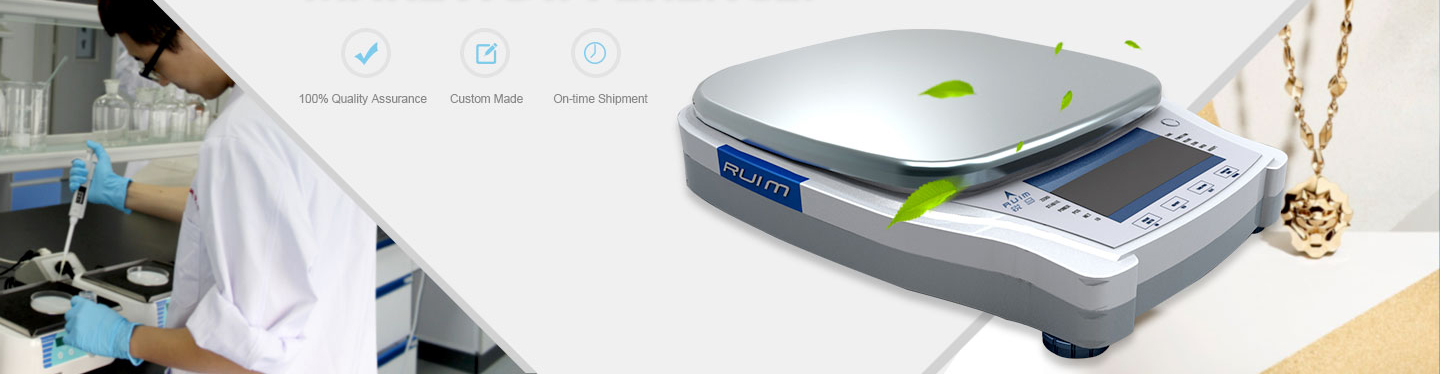
Weighing sensors are widely used in material weighing, product inspection, process control, and other areas. Their accuracy and stability directly affect a company's production efficiency, production costs, and product quality. Due to the inherent characteristics of the weighing sensors themselves and the complexity and harshness of the working environment, their failures are diverse, complex, and frequent. Determining and replacing weighing sensors on-site is not only time-consuming but also disrupts normal production rhythms, severely impacting a company's economic benefits.
With the continuous advancement of intelligent production processes in enterprises, traditional methods for fault diagnosis of weighing sensors can no longer meet the needs of modern enterprises for intelligent production. Therefore, the development of intelligent fault diagnosis devices for weighing sensors has important theoretical and practical significance. It can improve the detection accuracy and fault diagnosis efficiency of weighing sensors, thereby enhancing enterprise production efficiency and product quality. It is an important tool for promoting the integration of industry, academia, and research, focusing on addressing the development difficulties of enterprises.
Basic idea: Use a separation method for inspection and weighing, setting detection and weighing as two independent channels, with detection and weighing alternating. The weighing signal from the weighing sensor is output to the detection module or the weighing module through the detection channel and the weighing channel for inspection or weighing; real-time online inspection measures the change in signals from the weighing sensor at the zero scale and calibration scale points.
When the changes in the two weighing points of the empty scale and calibration simultaneously approach or reach the fault critical threshold of the weighing sensor, the change in the no-load output signal of the weighing sensor is detected. When the changes at the three points of empty scale, calibration, and no-load all approach or reach the fault critical threshold of the weighing sensor, the performance of the weighing sensor begins to deteriorate, and the system performs intelligent diagnostics and alarms.
When the changes in the two weighing points of the empty scale and calibration approach or reach the critical failure threshold of the weighing sensor, either individually or in combination, different levels of alarms will be triggered.System composition: This system consists of an improved weighing sensor, switching device, self-diagnostic weighing controller, lifting device, and analog junction box.
This system changes the traditional methods of detection and fault diagnosis by setting up two independent detection channels and weighing channels, and using channel switching, self-locking interlock controls, and redundancy design of contacts. It enables alternating detection and weighing, provides comprehensive intelligent monitoring of all online weighing sensors, effectively and promptly grasps the working status and lifecycle of the weighing sensors under specific operating conditions, makes fault detection and handling more targeted and predictable, allows for rapid and accurate judgment of fault points (or segments), shortens fault handling time, improves maintenance proactivity, and ensures the reliable, accurate, and stable operation of the weighing system.


